 Sideline Legacy
Player tendencies: every football player has his own way of playing
I wanted every player to have his own play style. Hand the ball to one running back and he puts his head down and goes downhill. Hand it to another and he's looking to bounce it outside. Their ratings might be close, but once you've watched them play you'd never mix them up.
It goes past running backs. Some quarterbacks will try to squeeze a throw into a tight window, and others wait until somebody's open. Some cornerbacks play right up on a receiver, and others sit back and keep everything in front of them. It's the same on both sides of the ball, from the pass rushers to the guys up front blocking for your quarterback.
Most styles come with a cost
The back who bounces it outside can hit a big run when the edge is open, and he can come up empty when it isn't. The downhill back takes the yards that are there. The quarterback who throws into tight windows makes plays other guys won't, and he also gives the defense more chances. Which style you want depends on your team and how you like to play.
What makes up a player
A player's style is separate from how good he is. His style decides what he tries, and his ability decides how well it goes.
On top of his natural style, there's whatever habit you've been coaching into him and whatever you asked him to focus on this week. What you know about him depends on how much of it you've actually seen on film.
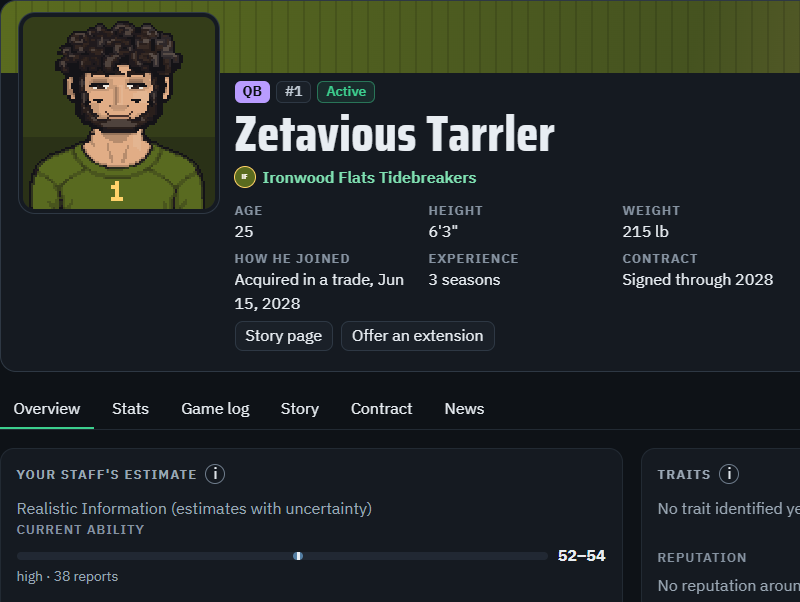
A quarterback's player page, with your staff's estimate of how good he is.
Work in progress.
View full size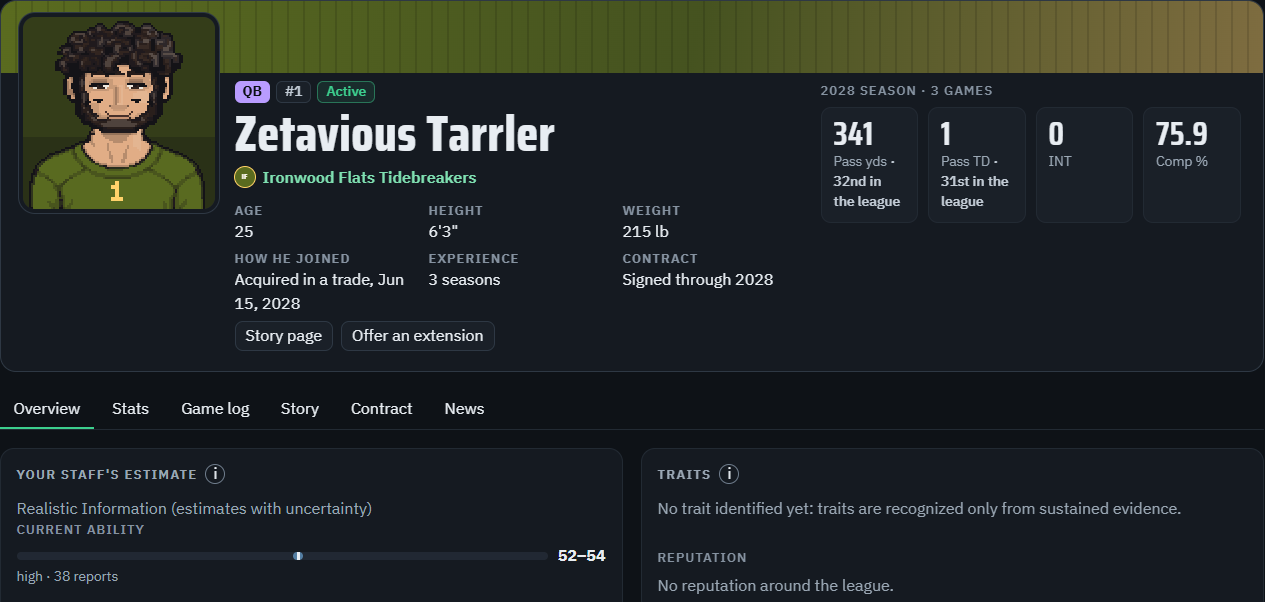
You see it on film
Every player has a playing style card that shows how he's played on film. Early on you won't have seen much, and the card tells you so. Once you've seen enough plays, it tells you which way he leans and how much film that read is based on.
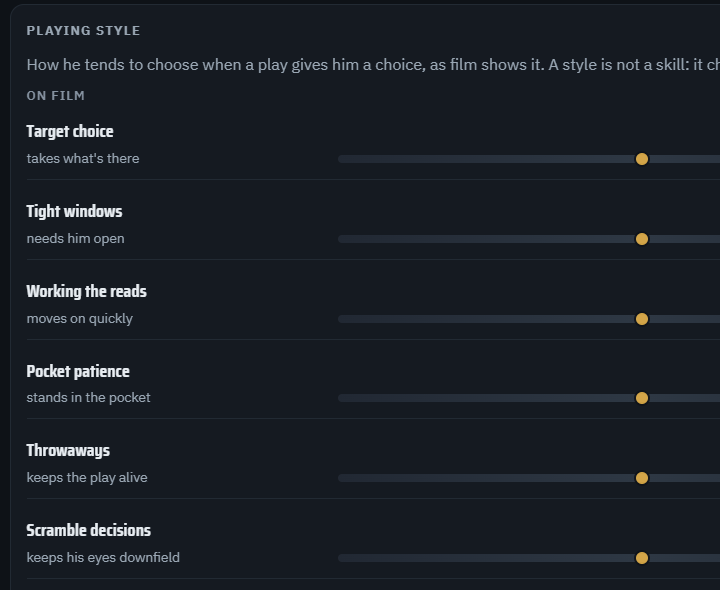
A quarterback's playing style, as film shows it.
Work in progress.
View full size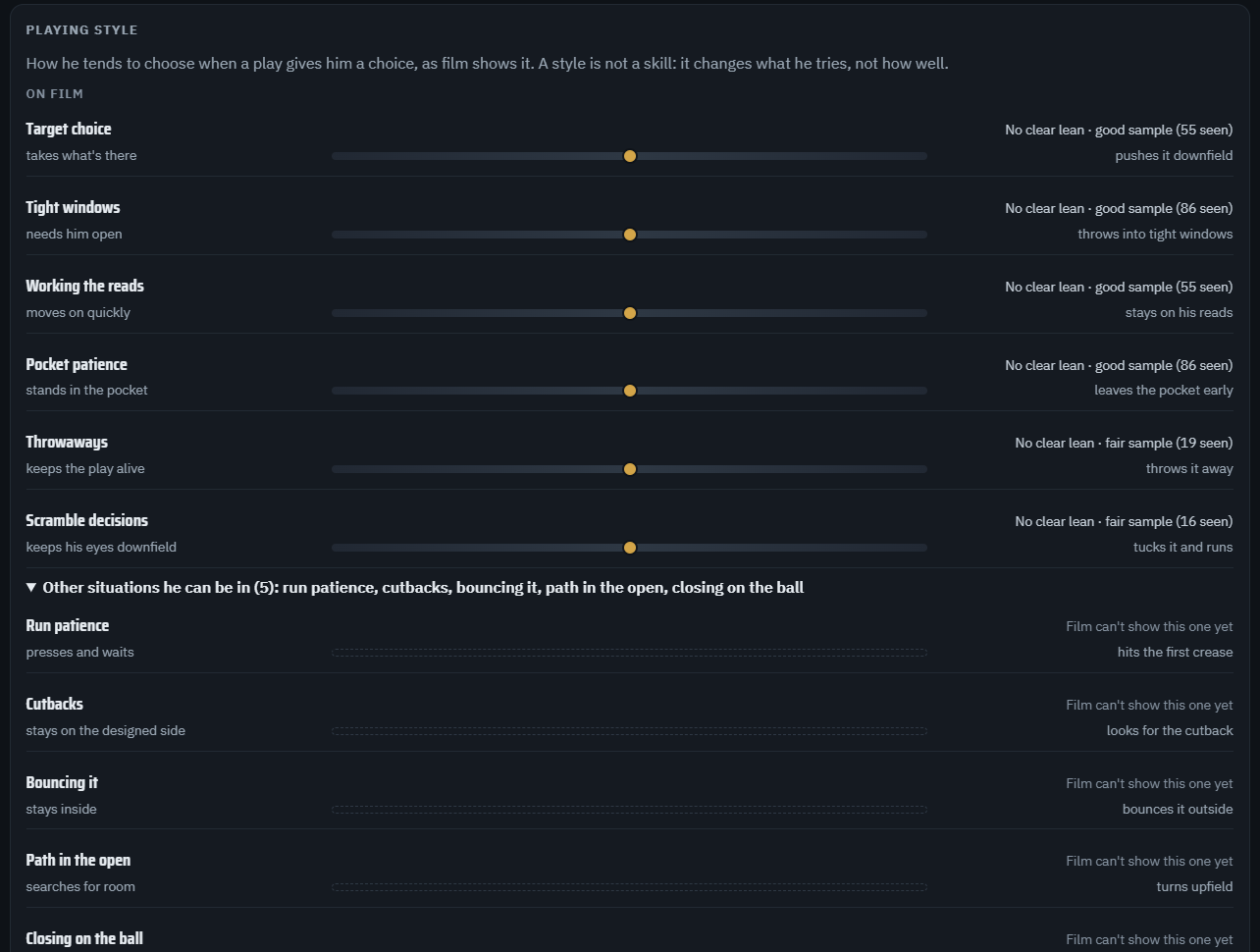
Football player development, one habit at a time
You can work on a player's style two ways. A habit is the long-term one. He works on it at practice, a little each day, and over time it moves his style part of the way toward what you want. An emphasis is just for this week's game, and it's gone after that.
You only get so many habit slots, and drills use them too, so you have to decide who's worth the practice time. Or you can leave a guy alone and let him play his game.
That's the player development side of the game, and it adds up over a career. The time you put into a young player in practice is what he turns into a few seasons later.
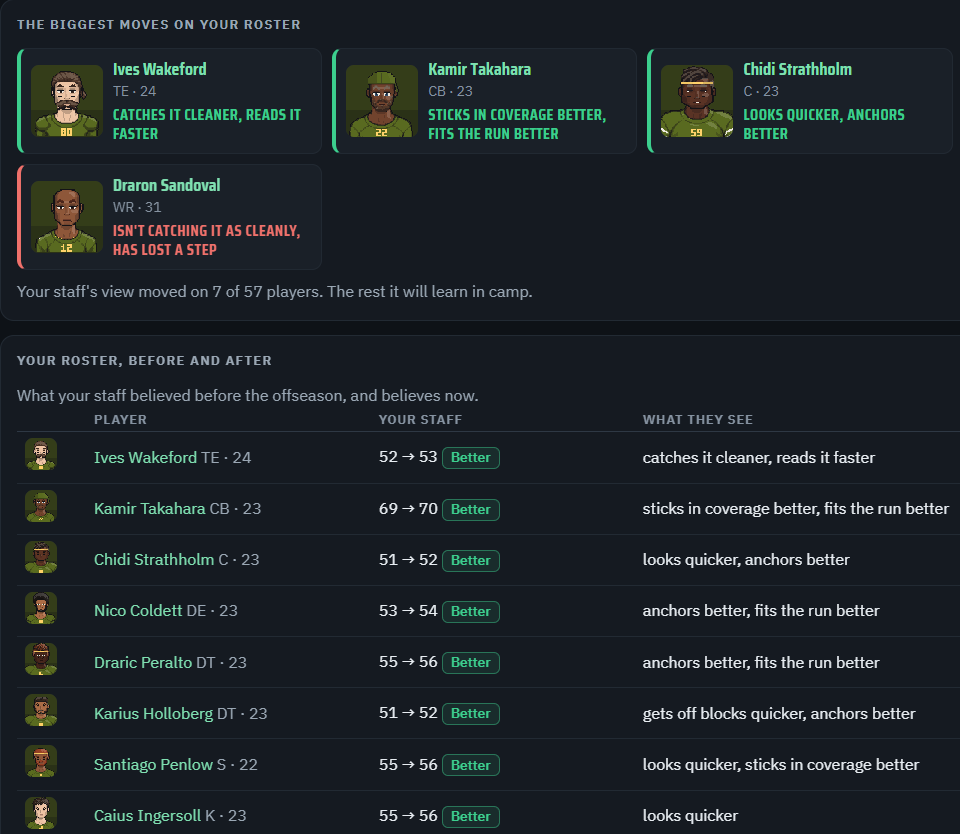
Progression day: who moved this offseason, as your staff sees it.
Work in progress.
View full size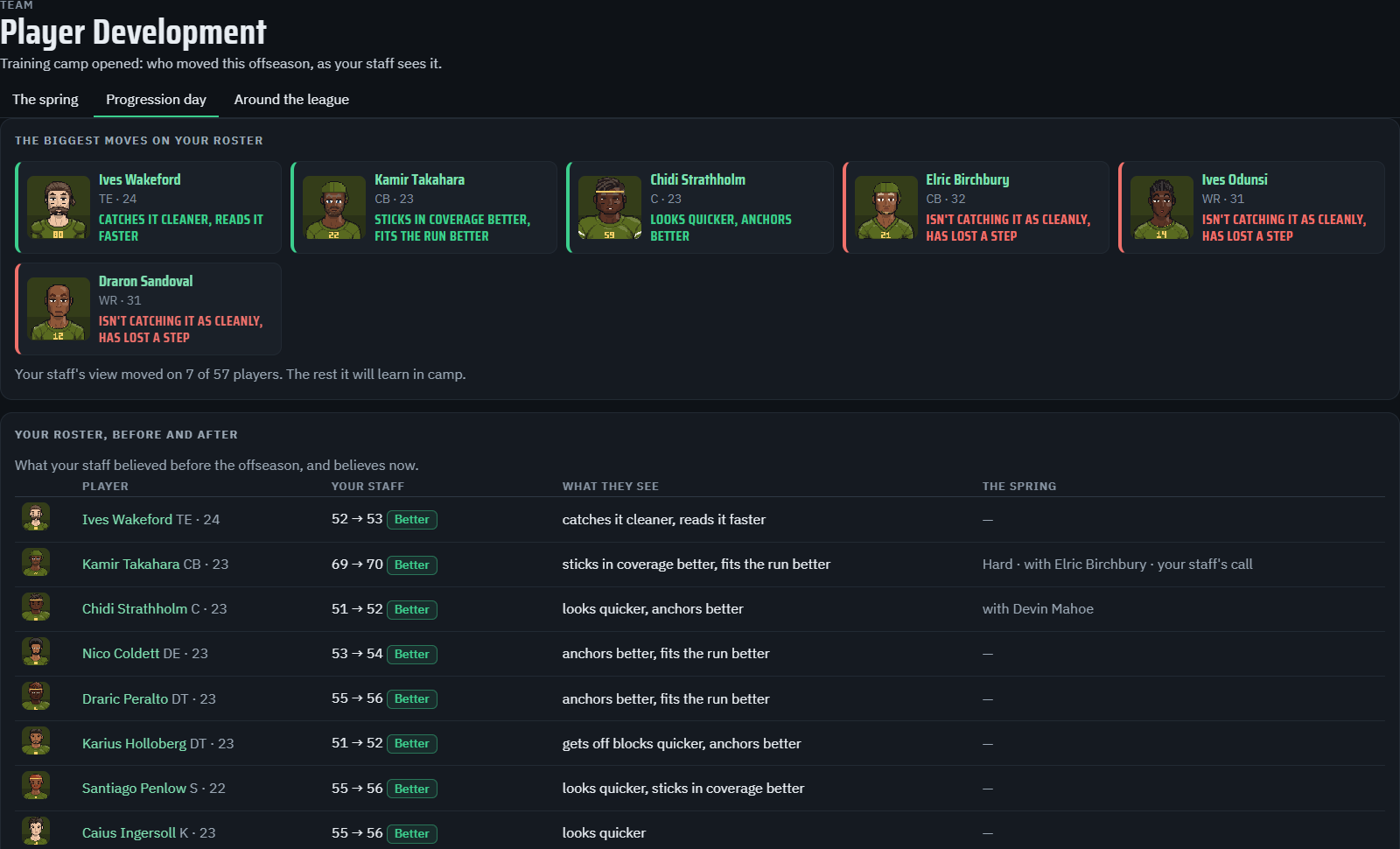
Examples from the game
Downhill or bounce
Takes the hole he's given, or looks to take it outside. Bouncing it can break a big run, and it can come up empty.
Tight windows
Tries to fit the ball in when the receiver is covered, or waits for someone to come open.
Cushion
Plays tight on the receiver, or sits back and keeps the catch in front of him.
Throwing it away
Gets rid of the ball when nothing's there, or holds on and looks for something late.
Join the playtest list
Get development updates and a chance to playtest when builds open up. No spam, and you can leave anytime.
Quick answers
Can I change a player's tendencies?
Yes, partly. Coach a habit in practice and he'll move part of the way toward it over time. You can also set an emphasis for one week's game. A finished habit sticks with him, and one you stop coaching before it's done fades.
Do all positions have tendencies?
Yes. Every position has its own styles you can see on film and coach, on both sides of the ball.